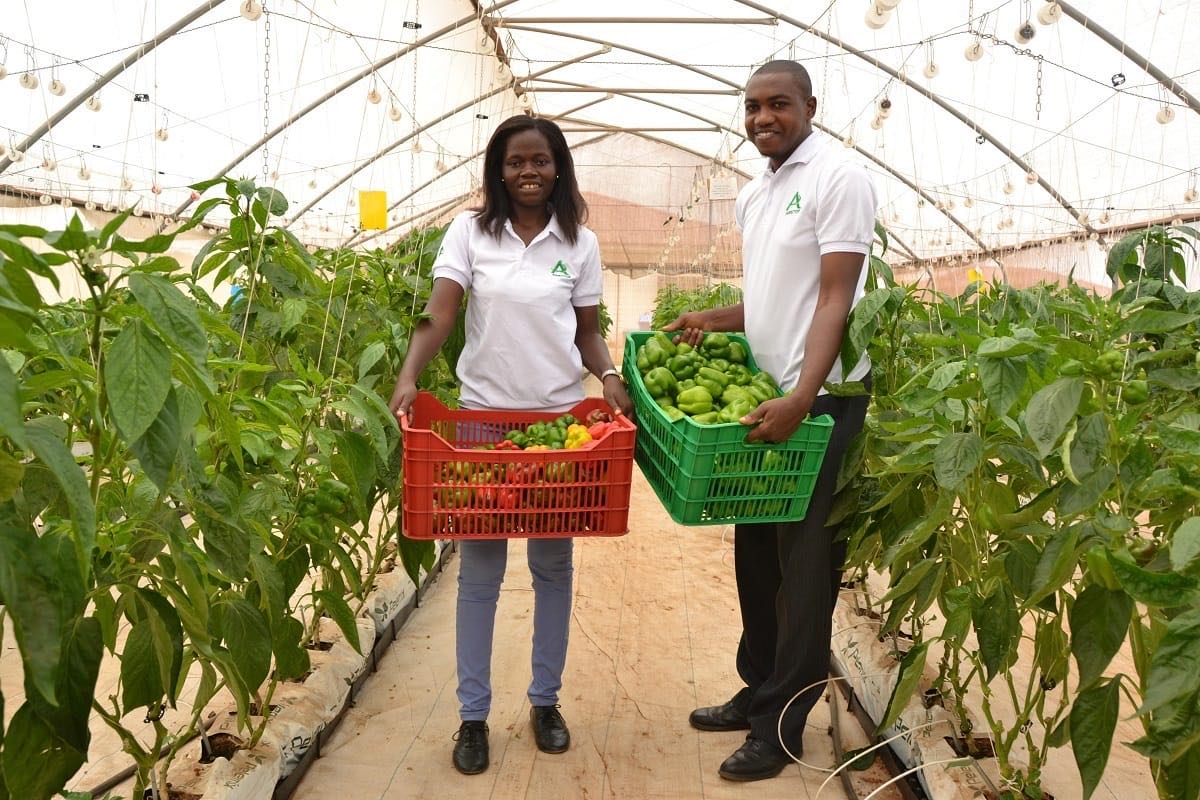
How to Choose the Perfect Greenhouse for Tropical Climates
Greenhouse growing in tropical Africa represents a major opportunity: better pest protection, control over the growing cycle, and off-season production with strong added value. Yet a greenhouse that isn’t adapted to local conditions can quickly become a heat trap that scorches your crops instead of protecting them.
Choosing the right greenhouse for a tropical climate requires careful thought across several technical dimensions. This guide walks you through that process so your investment pays off from the very first season.
The Specific Challenges of Tropical Climates
Before choosing a structure, you need to understand what your crops will face:
- High temperatures — conventional closed greenhouses can reach 50 to 60°C inside if not properly ventilated, far beyond the tolerance threshold of most vegetable crops
- High relative humidity — favors fungal diseases (botrytis, powdery mildew, downy mildew) if air circulation is insufficient
- Intense solar radiation — requires covering materials capable of filtering UV and diffusing light rather than concentrating it
- Strong seasonal winds — structures must withstand gusts without deforming or being torn away
- Insect pests — mosquitoes, whiteflies, thrips, and other pests are everywhere and can wipe out a harvest
Essential Selection Criteria
1. Controlling the Interior Climate
Ventilation is the single most critical factor in a tropical greenhouse. A well-designed structure must allow enough air exchange to keep the interior temperature within a reasonable range — ideally between 18 and 30°C depending on the crop.
Ridge ventilation (openings at the greenhouse peak) exploits the natural chimney effect: hot air rises and escapes through the top while cool air enters from the sides. This passive solution is the most economical and reliable.
Side ventilation with opening panels on the long-pan walls complements ridge ventilation by creating cross-airflow. Combining both systems can cut the temperature gap between inside and outside by half or more.
For high-value operations, evaporative cooling (pad-and-fan systems) can maintain cool temperatures even during the most intense heat peaks, at the cost of ongoing electricity use and regular maintenance.
Humidity management relies on the same active ventilation, but also on your choice of irrigation system: drip irrigation keeps foliage dry, reducing conditions favorable to disease. A connected hygrometer will alert you when relative humidity climbs to a dangerous level.
2. Structural Design
The structure must be built to last in a demanding environment.
Height and width: a tropical greenhouse should be taller than a temperate one. A ridge height of at least 5 meters is recommended to create enough air volume to buffer heat spikes. A width of 8 to 10 meters allows good air circulation without creating ventilation dead zones.
Structural material choice: galvanized steel remains the standard for professional structures thanks to its mechanical strength and durability. Aluminum is lighter and resists salt corrosion better in coastal areas. Always check the certification of the framing profiles and their load capacity against wind and heavy rain.
Wind resistance: in tropical zones, winds can exceed 100 km/h during storm events. The greenhouse must be anchored deeply into the ground (foundations or metal ground stakes), and its joints must account for the aerodynamic uplift forces that act on the covering.
3. Covering Material
The covering material you choose determines the microclimate inside the greenhouse.
Polyethylene film is the most economical option. Modern agricultural-grade films include anti-UV, anti-drip (to prevent leaf scorch from condensation), and heat-reflective treatments. Their lifespan ranges from 3 to 5 years depending on quality and exposure. For tropical climates, always choose films with a high light-diffusion index (milky rather than clear) to prevent scorching.
Multiwall polycarbonate offers better thermal insulation and a longer lifespan (10 to 15 years). It diffuses light well and resists impact. Its upfront cost is higher, but its lifetime economics are often better.
Insect screens and mesh are essential to protect ventilation openings. Choose mesh sizes suited to your target pests (50 mesh for thrips, 20 mesh for whiteflies).
Complementary Equipment for Tropical Conditions
Beyond the structure itself, certain equipment is nearly indispensable in a tropical environment:
- Shade nets (30 to 50% shading) for periods of intense sunlight or for crops with low heat tolerance
- Recording thermometers and hygrometers to build a history of interior conditions and catch problems early
- Automated irrigation systems built into the design from the start to simplify management and optimize water use
- Ground covers to suppress weeds, retain soil moisture, and limit evaporation
Common Mistakes to Avoid
Many farmers make the same mistakes when buying their first tropical greenhouse:
- Choosing a structure that’s too low to save money, which quickly becomes thermally uninhabitable
- Neglecting ventilation in favor of a closed design that seemed more protective
- Choosing a clear film that concentrates solar radiation instead of diffusing it
- Under-sizing the foundations relative to local wind conditions
- Skipping insect-proof screening, letting in pests that wipe out the benefits of protected cultivation
Investing in a greenhouse is a defining decision for your operation. A choice grounded in your climate, target crops, and budget will open up production possibilities far beyond what open-field farming allows.
The Arbre Bio Africa team has the expertise and partnerships to offer greenhouse solutions suited to West African conditions, complete with precision irrigation and coco peat substrates for soilless cultivation. We support you from project design through to full production, with technical follow-up throughout your first seasons. Contact us to discuss your project.